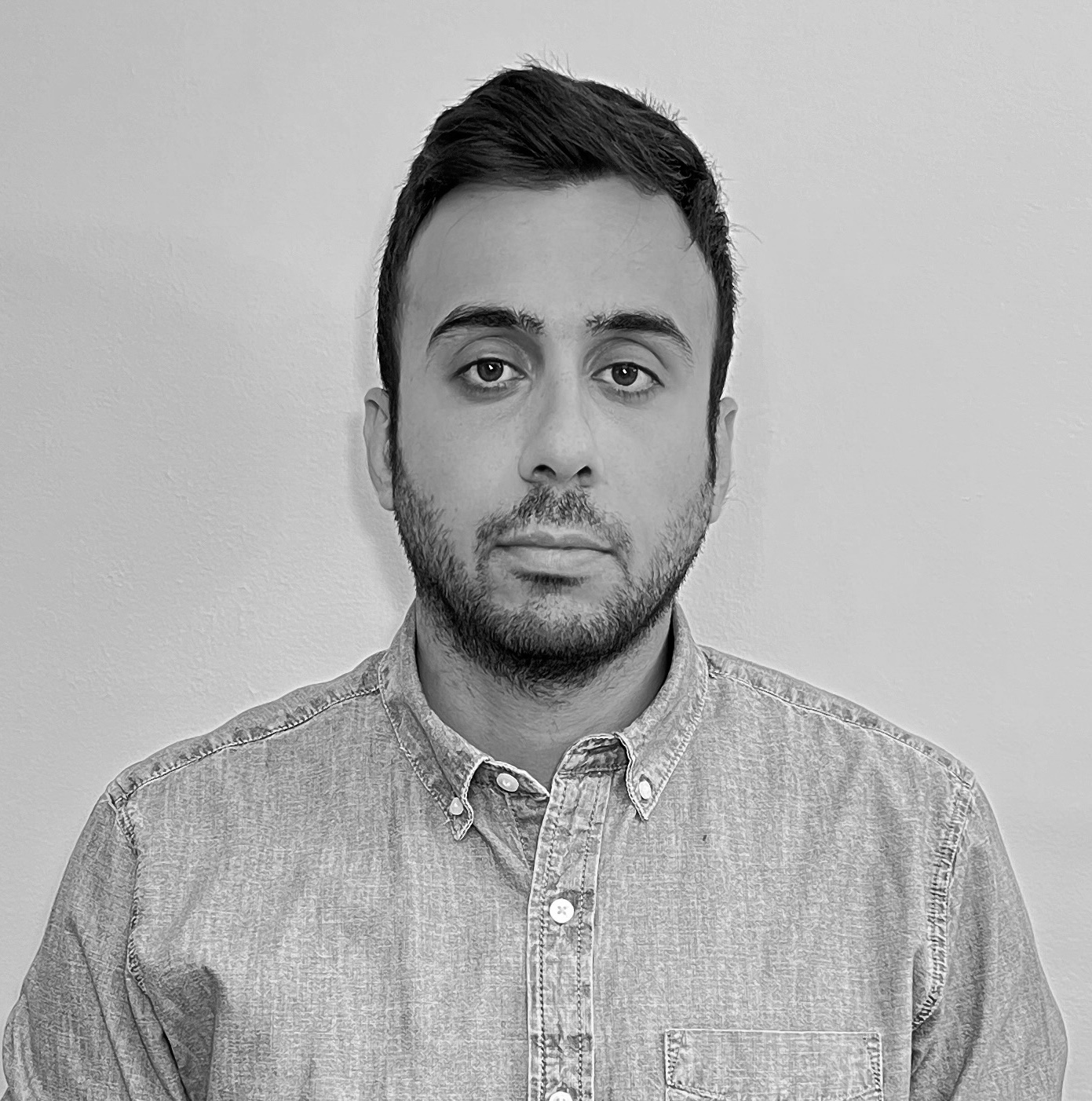
Hamed Hojatian
Ph.D. in Electrical Engineering
Research Engineer @ Huawei
Intro
I am currently working as a Research and Innovation Engineer at Huawei’s Advanced Wireless Research Lab, Kanata, Canada, focusing on topics related to 6G, AI-assisted communication systems, and Integrated Sensing and Communication (ISAC). My work involves exploring ways to improve connectivity, localization, and network efficiency by integrating physical-layer techniques with intelligent system design. Over the past several years, I have been involved in research at the intersection of wireless communication, signal processing, and machine learning. I am particularly interested in how emerging technologies can be translated into practical solutions for future communication networks. I completed my Ph.D. in Electrical Engineering at Polytechnique Montréal and hold a Master’s degree in Wireless Communication Systems Engineering from Isfahan University of Technology. My goal is to contribute to meaningful advancements in wireless systems through collaborative research and thoughtful engineering.
News
Published Patent
Our patent titled "Energy-efficient massive MIMO beamforming with machine learning optimization", developed during my internship at Ericsson, has been published. You can view it here.
Accepted paper in journal IEEE TMLCN
Our paper " Learning Energy-Efficient Transmitter Configurations for Massive MIMO Beamforming " is accepted for publication in IEEE Transactions on Machine Learning in Communications and Networking.
Joined Huawei Technologies
I joined Huawei Technologies Canada as a Research Engineer, working on cutting-edge projects in AI and 6G wireless communication.
Accepted paper in IEEE GlobeCom 2022
Our paper with title " Flexible Unsupervised Learning for Massive MIMO Subarray Hybrid Beamforming " is accepted for IEEE GlobeCom 2022.
Accepted paper in IEEE Communications Letters
The paper we submitted to IEEE Communications Letters has been accepted for publication. The simulation source code is avaible here.
Accepted paper in IEEE Transaction on Wireless Communications
A paper that we submitted to the IEEE Transaction on Wireless Communications has been accepted for publication. The simulation source code is avaible here.
Expertise
Wireless Communications
Machine Learning & AI
Signal Processing
Algorithm & Protocol Design
Integrated Sensing & Communications
5G/6G PHY Layer
Education
Polytechnique Montréal affiliate with University dé Montréal (UdM)
Doctor of Philosophy
Designing hybrid beamforming techniques for wireless networks, including an innovative RSSI-based hybrid beamforming design that leverages deep learning algorithms to enhance spectral and energy efficiency; Developing unsupervised learning techniques for intelligent beamforming and coordinated hybrid beam- forming in cell-free massive MIMO systems; Exploring subarray hybrid beamforming and efficient hardware design driven by unsupervised learning techniques, to reduce the complexity of wireless communication systems;
Isfahan University of Technology (IUT)
Master of Electrical and Computer Engineering
My master's thesis focused on the synchronization of time and frequency in a massive MIMO multiuser system uplink with frequency errors. Considering carrier frequency offset (CFO) and ICI in OFDM systems, I developed a method for jointly estimating the channel and CFO. My research has been extended to the design of a low-complexity receiver capable of compensating for CFOs and detecting symbols. As a result of my thesis, a paper was published in an IEEE conference.
Babol Noshirvani University of Technology (BNUT)
Supervisor:
Dr. Hossein Miare Naimi
Bachelor of Electrical and Computer Science
My thesis focused on the simulation of OFDM and OFDMA multi-user transmitters and receivers. Simulations were conducted in MATLAB.
EXPERIENCE

Research Engineer
I am currently working as a Research Engineer at Huawei, focusing on the PHY Layer, where I apply AI/ML techniques to advance 6G technology.

Research Intern
Contributing to a project focused on enhancing energy efficiency within the Ericsson - Global Artificial Intelligence Accelerator (GAIA) framework. My role involved developing and implementing strategies to optimize energy consumption of massive MIMO system using ML/AI techniques. This collaborative effort with a multidisciplinary team resulted in significant achievements, including first inventor of a US patent and the publication of a journal paper.

Research Associate
Prior to becoming a PhD researcher, I was a research associate in Dr. François Leduc-Primeau's lab.
Naghshe-Aval-Keyfiat (NAK) affiliate Mobile Company of Iran (MCI)
RF planner and optimizer
I began my career with the planning team, focusing on 3G and LTE. I became familiar with network optimization during my planning tasks. Due to my academic background and experience in network planning, I was able to join the Tehran project's network optimization team. In the beginning, I was a BSC owner, then I became a RNC owner of Tehran's network.
Publications
Journal Papers
H. Hojatian, J. Nadal, J-F. Frigon, F. Leduc-Primeau
IEEE Transactions on Machine Learning in Communications and Networking, 2024
[Paper]
H. Hojatian, J. Nadal, J-F. Frigon, F. Leduc-Primeau
IEEE Communications Letters, 2022
[Paper]
H. Hojatian, J. Nadal, J-F. Frigon, F. Leduc-Primeau
IEEE Transactions on Wireless Communications, 2021
[Paper]
Conference Papers
A. Hasanzadeh, H. Hojatian, J-F. Frigon, F. Leduc-Primeau
IEEE ICMLCN, 2024
[Paper]
H. Hojatian, J. Nadal, J-F. Frigon, F. Leduc-Primeau
IEEE GlobeCom, 2022
[Paper]
H. Hojatian, Vu N. Ha, J. Nadal, J-F. Frigon, F. Leduc-Primeau
IEEE ICC, 2020
[Paper]
H. Hojatian, M.J. Omidi, H. Saeedi-Sourck, A. Farhang
IEEE IST, 2016
[Paper]
Patents
H. Hojatian, F. Leduc-Primeau, J. Nadal, J-F. Frigon
WO Patent 2024/201,108, 2024
[Patent]